 Blog details


Let’s be honest about something most teams won’t say out loud. Link building is not hard because it’s complicated. It’s hard because it’s repetitive, slow, and brutally dependent on execution.
You need to find the right websites. Then find the right person. Then reach out. Then follow up. Then track everything. Then repeat it hundreds of times.
Now imagine doing that without tools.
This is exactly where most campaigns fall apart. Not because the strategy is wrong, but because the execution cannot scale.
In 2026, link building is no longer about effort alone. It is about systems. And systems are built on tools that remove friction from every stage of the process.
A good link building tool does not just give you data. It helps you act on that data.
There are thousands of tools that show backlinks, metrics, and scores. But the tools that matter are the ones that help you move from insight to execution.
A useful tool should either help you discover opportunities faster, reach people more effectively, or manage your workflow more efficiently.
Anything outside of that is noise.
No single tool can handle the entire link building process effectively.
Instead, high-performing teams build a stack where each tool plays a specific role.
One tool helps with backlink analysis. Another finds contact information. Another manages outreach. Another tracks results.
When these tools are connected, link building becomes a repeatable system instead of a scattered effort.
Let’s move beyond surface-level lists and look at how these tools are used in real workflows.
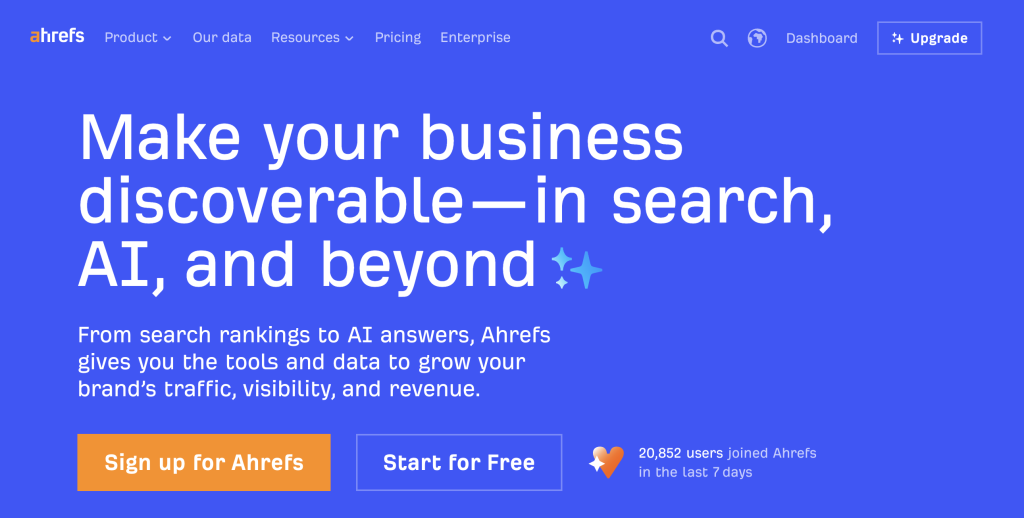
Ahrefs is not just a backlink checker. It is where most campaigns begin.
Teams use Ahrefs to reverse-engineer competitors. If a competing SaaS product is ranking well, its backlink profile reveals exactly where its authority is coming from.
You can identify:
A. Websites linking to competitors
B. Pages attracting links
C. Content formats that work
This turns link building from guessing into pattern recognition.
The real advantage of Ahrefs is not data alone. It is clarity. It shows you what already works so you don’t waste time experimenting blindly.
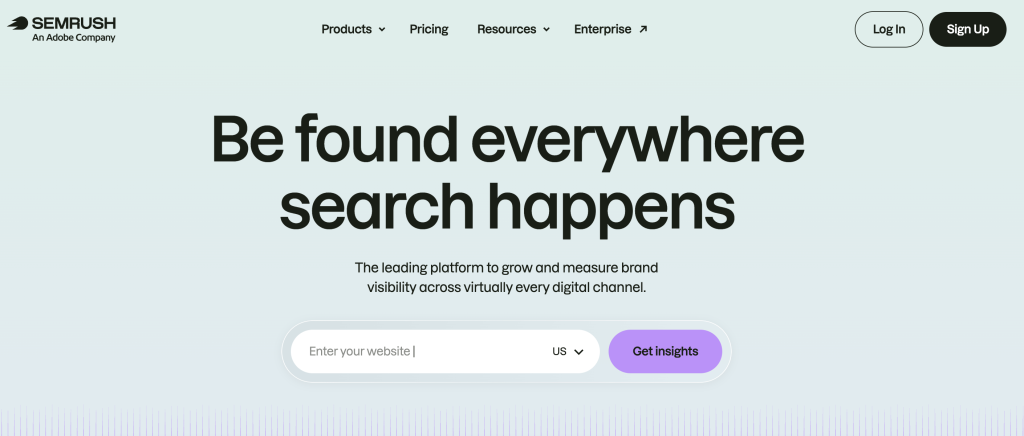
Semrush overlaps with Ahrefs in many areas, but its strength lies in combining backlink data with broader SEO strategy.
Teams use Semrush to connect:
i. Keywords
ii. Content performance
iii. Backlinks
This makes it easier to understand not just where links come from, but how they impact rankings.
For growth teams, this connection is critical. It helps prioritize link building efforts based on actual business impact rather than vanity metrics.
BuzzStream solves one of the biggest problems in link building: chaos.
Without a system, outreach quickly becomes unmanageable. Emails get lost, follow-ups are forgotten, and conversations disappear.
BuzzStream organizes everything.
You can track:
1. Who you contacted
2. When you followed up
3. What responses you received
Over time, this creates a structured outreach pipeline.
The biggest advantage is consistency. Instead of starting from scratch every time, you build a database of relationships.
Pitchbox is often used by agencies and larger teams that need to scale outreach.
It automates parts of the process while still allowing personalization.
The key difference between Pitchbox and basic email tools is that it is built specifically for link building workflows.
You can:
1. Segment prospects
2. Schedule follow-ups
3. Track campaign performance
This makes it possible to run large campaigns without losing control.
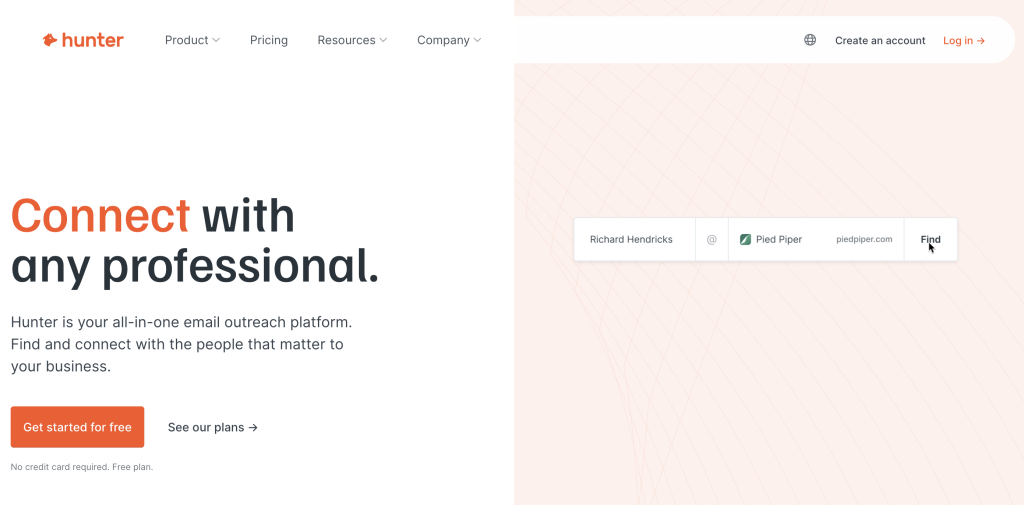
One of the most time-consuming parts of link building is finding the right person to contact.
Hunter simplifies this.
Instead of manually searching for emails, you can quickly find verified contact information associated with a domain.
This reduces friction in the outreach process and increases response rates because you are reaching the right people.
Respona stands out because it connects link building with content promotion.
Instead of treating outreach as a standalone activity, it integrates it with campaigns such as:
a. Guest posting
b. Resource promotion
c. Digital PR
This makes it particularly useful for teams that want to align link building with broader marketing efforts.

HARO operates differently from most tools.
Instead of reaching out to websites, you respond to journalists who are looking for sources.
When successful, this can result in backlinks from major publications.
The challenge is competition. Many people respond to the same queries.
The advantage is authority. A single successful placement can carry significant weight.
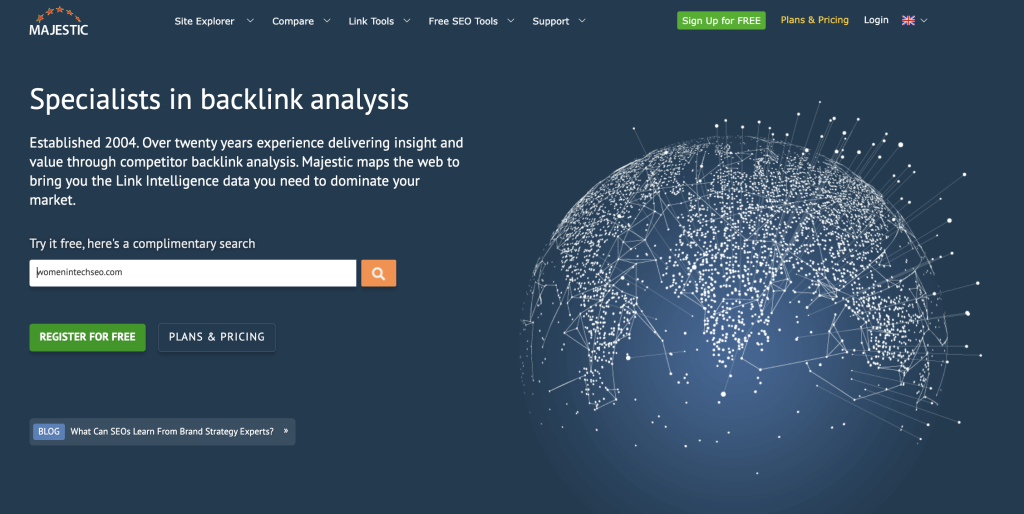
Majestic focuses specifically on link intelligence.
Its metrics, such as Trust Flow, help evaluate the quality of backlinks in a way that goes beyond surface-level scores.
This is particularly useful when assessing whether a link is worth pursuing.
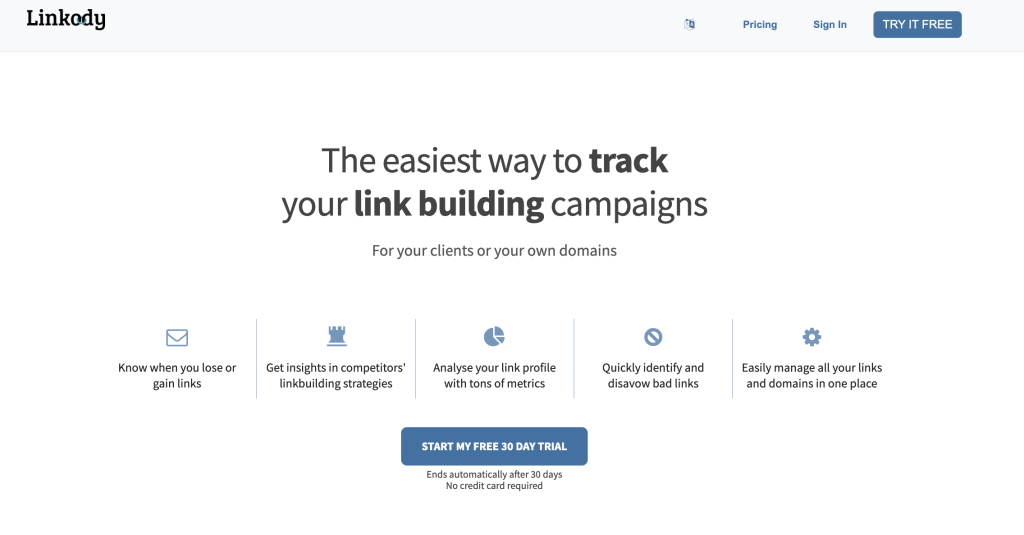
Link building does not end when a link goes live.
Links can be removed, changed, or lost over time.
Linkody helps track these changes so you can maintain a healthy backlink profile.
Despite being free, Google Search Console remains one of the most valuable tools.
It provides direct insights from Google about:
a. Which links are recognized
b. How pages are performing
c. Where traffic is coming from
This makes it an essential part of any link building stack.
Having the right tools does not guarantee success.
Many teams fall into the trap of collecting tools without building a system around them.
They gather data but do not act on it. They automate outreach but lose personalization. They track metrics but ignore context.
Tools amplify your strategy. If your strategy is weak, tools will not fix it.
The real advantage comes from combining tools into a structured workflow.
Prospecting feeds into outreach. Outreach feeds into link acquisition. Link acquisition feeds into performance tracking.
This creates a loop that improves over time.
Teams that build this system consistently outperform those that rely on isolated efforts.
Link building tools are evolving rapidly.
AI is being integrated into prospecting, outreach, and analysis. Automation is becoming more sophisticated. Data is becoming more actionable.
But one thing remains constant.
Tools do not replace human judgment. They enhance it.
The teams that win will be those that combine tools with strategy, not those that rely on tools alone.
The best SEO link building tools are not shortcuts. They are enablers. They help you move faster, stay organized, and scale your efforts. But the real advantage comes from how you use them.
For agencies, founders, and growth teams, the goal should not be to collect tools. It should be to build systems that turn effort into results.
If you’re ready to move beyond slow, inconsistent link building and build a system that actually scales…
👉 Reach out today and let our team help you implement a strategy powered by the right tools and proven execution.
Because in modern SEO, success is not about working harder. It is about working smarter with the right systems in place.